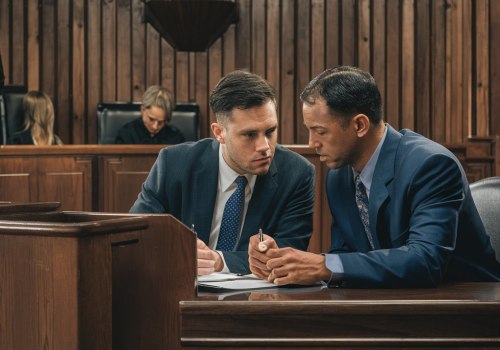
Understanding the intricacies of criminal law is essential for anyone navigating the legal system, especially when it comes to the types of trials that can occur. In the realm of criminal law, two primary trial formats exist: the bench trial and the jury trial. Each format has its own unique characteristics, procedures, and implications for defendants, making it crucial for individuals seeking criminal law services to grasp these differences. A bench trial is one where a judge serves as the sole decision-maker, evaluating the evidence and rendering a verdict without a jury's involvement. This format can often lead to a more streamlined process, as judges are typically well-versed in legal standards and can expedite proceedings.
Conversely, a jury trial involves a group of peers who listen to the evidence presented and deliberate to reach a verdict. This method emphasizes community involvement in the justice system and can provide a sense of fairness and impartiality. The choice between a bench trial and a jury trial can significantly impact the outcome of a case. Factors such as the nature of the charges, the complexity of the evidence, and even public sentiment can influence this decision. For those seeking criminal law services, understanding these distinctions is not just academic; it can be pivotal in strategizing defense approaches and anticipating potential outcomes in criminal proceedings.
What is a Bench Trial?
A bench trial, also known as a court trial, is a legal proceeding in which a judge serves as the sole decision-maker, rather than a jury.In this type of trial, the judge evaluates the evidence presented, applies the law, and ultimately renders a verdict. This process is often preferred in certain cases due to its streamlined nature and the expertise of the judge in interpreting complex legal issues.
Bench Trial Process
The bench trial process typically follows these steps:- Pre-Trial Motions: Before the trial begins, both parties may file motions to resolve specific legal issues.
- Opening Statements: Each side presents an overview of their case to the judge.
- Presentation of Evidence: The prosecution and defense present their evidence, including witness testimonies and documents.
- Closing Arguments: After all evidence is presented, both sides summarize their cases.
- Verdict: The judge deliberates and delivers a verdict based on the evidence and applicable law.
Advantages of Bench Trials
There are several advantages to choosing a bench trial over a jury trial:- Expertise: Judges are trained legal professionals who can better understand complex legal issues than a lay jury.
- Efficiency: Bench trials are generally quicker than jury trials, as they eliminate the need for jury selection and can streamline proceedings.
- Cost-Effectiveness: With fewer procedural steps and shorter durations, bench trials can be less expensive for both parties.
- Privacy: Bench trials are often less publicized than jury trials, which can be beneficial for sensitive cases.
What is a Jury Trial?
A jury trial is a legal proceeding in which a group of individuals, known as jurors, is tasked with determining the outcome of a criminal case. This process is a fundamental aspect of the American legal system, ensuring that defendants are judged by their peers.In a jury trial, the jury listens to the evidence presented by both the prosecution and the defense, deliberates on the facts, and ultimately renders a verdict of guilty or not guilty.
Jury Trial Process
- Selection of Jurors: The process begins with jury selection, where potential jurors are questioned to ensure they can be impartial. This is often referred to as "voir dire."
- Opening Statements: After jurors are selected, both sides present their opening statements, outlining what they intend to prove during the trial.
- Presentation of Evidence: The prosecution presents its case first, followed by the defense. This includes witness testimonies, expert opinions, and physical evidence.
- Closing Arguments: Once all evidence has been presented, both sides make closing arguments to summarize their cases and persuade the jury.
- Deliberation: The jury then retreats to deliberate in private, discussing the evidence and attempting to reach a unanimous verdict.
- Verdict: Finally, the jury returns to the courtroom to announce its decision.
- Community Involvement: Jury trials allow for community participation in the justice system, reflecting societal values and norms.
- Checks and Balances: They serve as a check on government power, ensuring that a defendant's fate is not solely in the hands of a judge.
- Diverse Perspectives: A jury composed of individuals from various backgrounds can provide a more balanced perspective on the case.
Key Differences Between Bench Trials and Jury Trials
When navigating the complexities of criminal law services, understanding the differences between a bench trial and a jury trial is crucial for defendants and their legal representation. Each type of trial has distinct characteristics that can significantly impact the outcome of a case.Process
A bench trial is presided over by a judge who serves as the sole decision-maker.The judge evaluates the evidence, hears witness testimonies, and ultimately renders a verdict based on the law. In contrast, a jury trial involves a group of citizens who are tasked with determining the facts of the case. The jury listens to the evidence presented by both sides and deliberates to reach a consensus on the verdict.
Decision-Making
The decision-making process in these trials also differs significantly. In a bench trial, the judge's legal expertise allows for a more streamlined process, often resulting in quicker resolutions.Conversely, jury trials can be more time-consuming due to the need for jury selection, instructions, and deliberation. Additionally, juries may be influenced by emotional factors or public opinion, which can lead to unpredictable outcomes.
Outcomes
The outcomes of bench trials and jury trials can vary widely. Bench trials tend to favor legal technicalities and may result in more consistent rulings based on precedent. On the other hand, jury trials can reflect community standards and values, potentially leading to more lenient or harsher sentences depending on the case's context.When to Choose
Deciding whether to opt for a bench trial or a jury trial depends on several factors, including the nature of the charges, the strength of the evidence, and the defendant's personal circumstances.For cases involving complex legal issues or where emotional bias may play a role, a bench trial might be preferable. Conversely, if there is strong public sentiment or if the defendant seeks to appeal to community values, a jury trial could be advantageous.Ultimately, consulting with experienced criminal law services can provide invaluable guidance in making this critical decision.
When to Choose a Bench Trial vs. a Jury Trial
Choosing between a bench trial and a jury trial is a critical decision in the realm of criminal law services. Defendants and their attorneys must carefully evaluate several factors to determine the most advantageous path forward.Understanding the Case
- Complexity of the Case: If the case involves intricate legal issues or technical evidence, a bench trial may be preferable.
Judges are trained to understand complex legal matters, whereas juries may struggle with nuanced details.
- Public Perception: In high-profile cases, a jury may be influenced by public opinion or media coverage. A bench trial can mitigate this risk, as judges are expected to remain impartial and base their decisions solely on the evidence presented.
Defendant's Background
- Criminal History: Defendants with prior convictions might fare better in front of a judge, who may be more lenient than a jury that could be swayed by emotional responses to past behavior.
- Personality and Demeanor: A defendant's ability to connect with a jury can significantly impact the outcome. If a defendant is uncomfortable in the spotlight or struggles with public speaking, a bench trial might be less stressful.
Legal Strategy
- Strength of Evidence: If the evidence is overwhelmingly in favor of the defense, a jury trial might be advantageous. Conversely, if the prosecution's case is weak, a bench trial could lead to a quicker resolution.
- Potential Sentencing: Understanding the possible penalties is crucial.
A judge may have more discretion in sentencing than a jury, which could influence the decision on which trial type to pursue.
Common Misconceptions About Bench and Jury Trials
When it comes to understanding the differences between bench trials and jury trials in criminal law, several misconceptions can cloud judgment. Addressing these myths is crucial for individuals seeking criminal law services.- Myth 1: Bench Trials Are Always Faster Than Jury Trials
Many believe that bench trials are inherently quicker than jury trials. While it’s true that bench trials can be expedited due to the absence of jury selection and deliberation, the complexity of the case can still lead to lengthy proceedings. - Myth 2: A Judge Is Less Impartial Than a Jury
Some assume that a judge may have biases that a jury would not.However, judges are trained professionals who adhere to strict ethical guidelines and are committed to delivering fair judgments based on the law.
- Myth 3: Jury Trials Are Always More Favorable for Defendants
While many defendants prefer jury trials, believing they offer a better chance of acquittal, this is not universally true. The effectiveness of a jury trial can depend on various factors, including the nature of the evidence and the persuasiveness of the arguments presented. - Myth 4: Bench Trials Lack Transparency
Some people think that bench trials are less transparent than jury trials. In reality, both types of trials are public proceedings, and the judge’s decisions are subject to scrutiny just like a jury’s verdict. - Myth 5: You Can Choose Between a Bench Trial and a Jury Trial Anytime
It’s a common misconception that defendants can freely choose their trial type. In many jurisdictions, the choice may depend on specific legal criteria or the nature of the charges.
Understanding the realities of bench and jury trials is essential for anyone facing criminal charges.
Conclusion: Choosing the Right Trial for Your Case
In conclusion, understanding the differences between a bench trial and a jury trial is crucial when navigating the complexities of criminal law services. Each type of trial offers distinct advantages and disadvantages that can significantly impact the outcome of a case.A bench trial, presided over by a judge, can be beneficial in cases where legal nuances are paramount. Judges are trained to interpret the law and may be more adept at understanding intricate legal arguments. This can lead to a more streamlined process, often resulting in quicker resolutions.However, the absence of a jury means that the defendant must rely solely on the judge's discretion, which can be a double-edged sword.On the other hand, a jury trial allows for a group of peers to evaluate the evidence and make a decision based on community standards. This can be particularly advantageous in cases where emotional factors play a significant role. A jury may be more sympathetic to certain circumstances, potentially leading to more favorable outcomes for defendants. However, jury trials can also be unpredictable and may take longer to resolve.Ultimately, the choice between a bench trial and a jury trial should be made with careful consideration of the specific circumstances surrounding each case.
Factors such as the nature of the charges, the strength of the evidence, and the potential biases of jurors should all be taken into account. Consulting with experienced criminal law services can provide invaluable guidance in making this decision.By understanding these differences and weighing the pros and cons of each trial type, defendants can better position themselves for success in their legal battles. Whether opting for a bench trial or a jury trial, being informed is key to navigating the complexities of criminal law effectively.